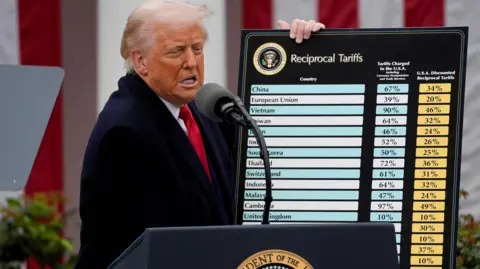
Tariff policy is proving to be one of the most important levers in international trade and domestic economic strategy in 2025 Tariff News. From major trade partner disputes to domestic reforms, recent tariff news is reshaping markets, industries, and consumer prices. Below is a deep‐dive into the latest developments — what’s happening, why it matters, and what it implies for Pakistan.
1. Global Tariff Tensions and Their Impacts
A. U.S.‑China Tariff Saga
One of the most visible stories in the tariff arena is the escalating dispute between United States and China.
-
China retaliated by raising tariffs on U.S. imports to around 84% in some cases, following what it calls “unilateral” U.S. tariff increases. The Express Tribune+2Thailand Business News+2
-
The Organisation for Economic Co‑operation and Development (OECD) warns that such tariff hikes are likely to slow global growth, push up inflation, and reduce real incomes: for example, a 10 percentage‐point tariff increase could reduce global output by 0.3 % from 2026. mint
-
These dynamics mean that even countries not directly involved are affected via supply chain disruption, cost inflation, and redirected trade flows.
Why this matters for Pakistan and others:
When the largest economies raise tariffs, firms in smaller or mid‑sized economies often feel spillovers — raw‐material costs rise, markets shift, export competitiveness changes. Pakistan, for example, must account for these global dynamics in its own tariff reforms.
B. Broader Global Risks
The tariff escalations are signalling risk not just for bilateral trade but for the global economy:
-
Rising tariffs increase costs for consumers and businesses.
-
They introduce uncertainty which dampens investment, delays capital expenditure, and affects trade.
-
Problems compound when tariffs trigger retaliation, non‐tariff barriers, or supply‑chain rewiring.
2. Pakistan’s Tariff Reform – Major Shift Underway
Turning to a more local focus, the Pakistan government has embarked on a significant overhaul of its tariff and trade policy.
Key Reforms
-
The government has approved a five‑year tariff reform plan which aims to reduce the simple average tariff from ~19% to ~9.5% over five years. Dawn
-
One of the central changes: capping customs duty (CD) at max 15% for all goods eventually. Business Recorder+1
-
The additional customs duty (ACD) and regulatory duties (RD) – currently layered over base customs duty – are to be phased out over the next 3‑5 years. Business Recorder+1
-
In the finance bill for 2025‑26, the government introduced new tariff slabs: 0 %, 5 %, 10 %, and 15 %. Business Recorder+1
-
Importantly, raw materials, intermediate goods, and capital goods get a privileged treatment: Example: over 7,066 tariff lines are to have duties reduced, including abolition of ~2% ACD on ~4,294 lines. Dawn
What’s the Purpose?
-
Reduce production cost and increase competitiveness of Pakistan’s industries (textiles, chemicals, iron & steel etc).
-
Promote export‑led growth by making inputs cheaper and by lowering protectionist burdens.
-
Attract foreign/direct investment by simplifying tariff regimes, eliminating discriminatory duties.
-
Lower inflation and ease pressure on consumers by reducing input costs that feed into final goods.
Some Complications & Slippages
-
While the direction is clear, there are signs of reversal or moderation: e.g., the government reversed tariff cuts for 285 items in one tranche to avoid job losses in certain sectors. The Express Tribune
-
The success of reforms depends on consistent implementation, avoidance of selective protection, and ensuring industries use the cheaper inputs to upgrade rather than simply raise profits.
3. Implications for Businesses, Consumers & the Economy
Here’s how these tariff developments play out practically.
For Industry & Exports
-
Industries that rely heavily on imported raw materials (e.g., textiles, chemicals) will benefit from lower duty burdens. Lower input cost means improved margins or more competitive export pricing.
-
Exporters will likely become more globally competitive. The reform aims to raise exports by US$5 billion over the five‐year period. Dawn
-
Local firms must still adapt: cheaper inputs alone won’t help if productivity, scale, or quality remain poor.
For Consumers
-
Reduced duties can lead to lower cost of imported intermediate goods and potentially lower final goods prices (though this is not guaranteed).
-
On the flip side, if local industries lose protection too quickly, there might be job risks or increased imports that challenge domestic capacity.
For the Economy
-
Simplifying tariffs and reducing them can improve allocative efficiency, attract FDI, and help integrate the economy globally.
-
However, large reductions in protection need offsetting competitive capabilities — otherwise, local firms may struggle and unemployment could rise in vulnerable sectors.
-
Global environment matters: if major trade partners impose high tariffs or there is global economic slowdown, Pakistan’s export push may face headwinds.
4. Key Takeaways & Forward Look
-
The global trade‐tariff landscape is volatile. The U.S.–China confrontation shows the danger of tariff escalations and retaliation.
-
Pakistan is making a bold shift in its tariff policy: simpler slabs, lower duties, phased elimination of extra layers of duty.
-
But reform is not just about reducing tariffs — it’s also about strengthening industries, improving productivity, and ensuring global integration.
-
Businesses should position accordingly:
-
Importers & manufacturers: take advantage of cheaper inputs now in the pipeline.
-
Exporters: gear up for stronger competition; invest in quality, branding, scale.
-
Policy watchers: track implementation, and how protections for sensitive sectors are managed.
-
-
For the near term, there might be turbulence: domestic industries might resist change, global trade disruptions might affect export opportunities, and consumer gains might be slower.
-
In the medium to long term, if reforms stick and execution is efficient, Pakistan’s economy could become more competitive, diversified and resilient.
5. Conclusion
Tariff policy may seem arcane, but its effects ripple across economies, industries, consumers and global trade relationships. The news of massive reform in Pakistan and large‐scale tariff confrontations globally underscore how critical these policies are.